Best Astro Themes for 2026 (Free and Premium)
Where to find the best Astro themes in 2026, what to check before you buy, and standout free and premium options for SaaS, portfolios, blogs, photography and local business.
Astro has become one of the best ways to build a fast website, and the theme ecosystem has grown up with it. By 2026 there are hundreds of Astro themes across free and premium options, which is great news and also a lot to sort through. This guide covers where to look, what to check before you commit, and standout themes by use case.
Where to find Astro themes
There are three places worth knowing, and they serve different purposes.
| Source | What it is | Best for |
|---|---|---|
| astro.build/themes | The official directory, with featured themes from established vendors | Trusted, framework-blessed starting point |
| Curated directories (e.g. Statichunt) | Hand-picked listings of hundreds of free and paid themes | Browsing breadth, filtering by category |
| Theme shops (Themefisher, Cosmic Themes, AeroLaunch) | Studios that design, sell and support their own themes | Buying, support, and a consistent design voice |
The official directory’s featured slots are paid third-party themes from vendors like Themefisher and others, most now updated for Astro v6 with Tailwind v4. Curated directories such as Statichunt list 400 or more themes spanning open-source, free and premium tiers, which makes them the fastest way to scan the landscape. The shops are where you actually buy, get updates, and reach a human for support.
What to look for before you buy
Not all themes are equal. Before you pay, check the essentials:
- Current framework. Look for Astro 7 and Tailwind v4. A theme on an old Astro version means you inherit an upgrade project on day one.
- Full code ownership. You should get the complete Astro source with a clear license that covers personal, client and commercial use. Avoid anything that locks you into a platform.
- The pages and sections you need. A blog index and post layout, contact and about pages, the marketing sections relevant to your use case. Count what ships before you assume it is there.
- Updates and support. Confirm updates are included and that there is a real channel for help.
- Price in context. Premium single themes commonly run in the seventy-five to one hundred fifty dollar range on the curated directories. Lower-priced options exist - the question is whether quality and support hold up at the lower price.
Standout themes by use case
The right theme depends on what you are building. Here are strong picks across the most common categories, drawn from the AeroLaunch collection, with notes on who each fits.
SaaS and startups
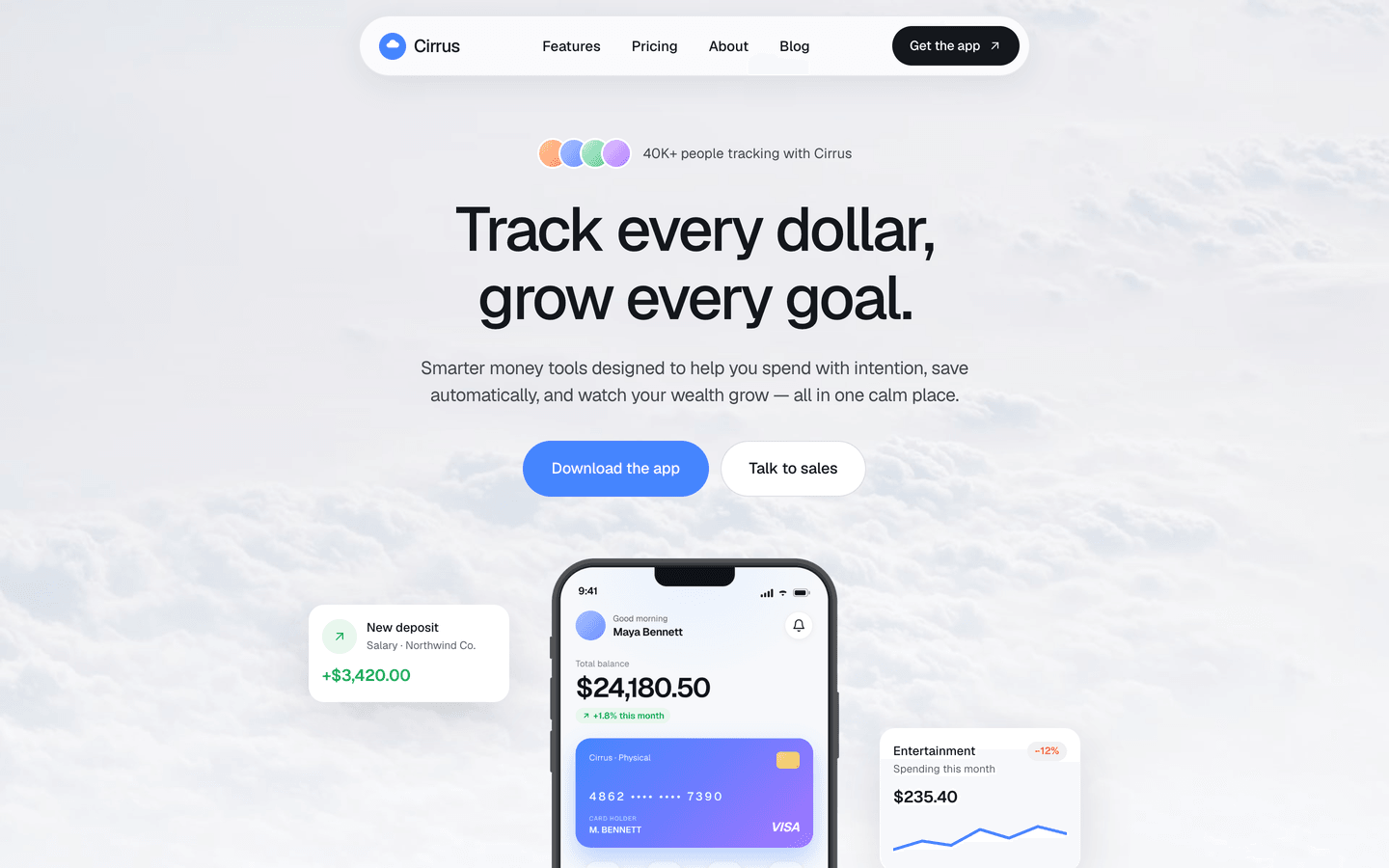
For product and startup sites, you want a clean hero, a feature story, pricing and social proof. Cirrus is a calm, app-and-fintech theme with a real device mockup and live mini-charts, and Slab takes a bolder neo-brutalist direction for products that want personality. Both are built to make a young product look established.
Agencies and portfolios
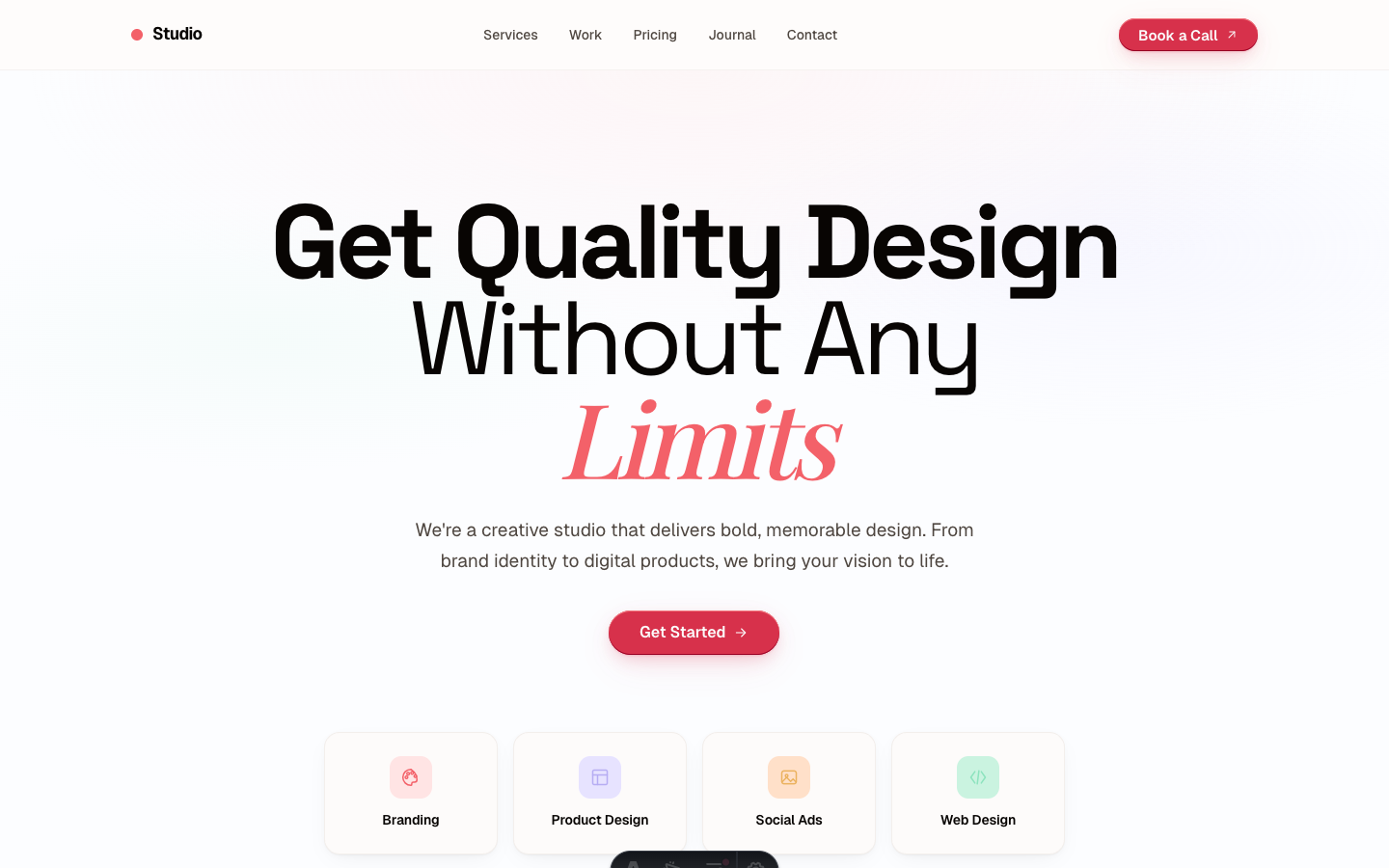
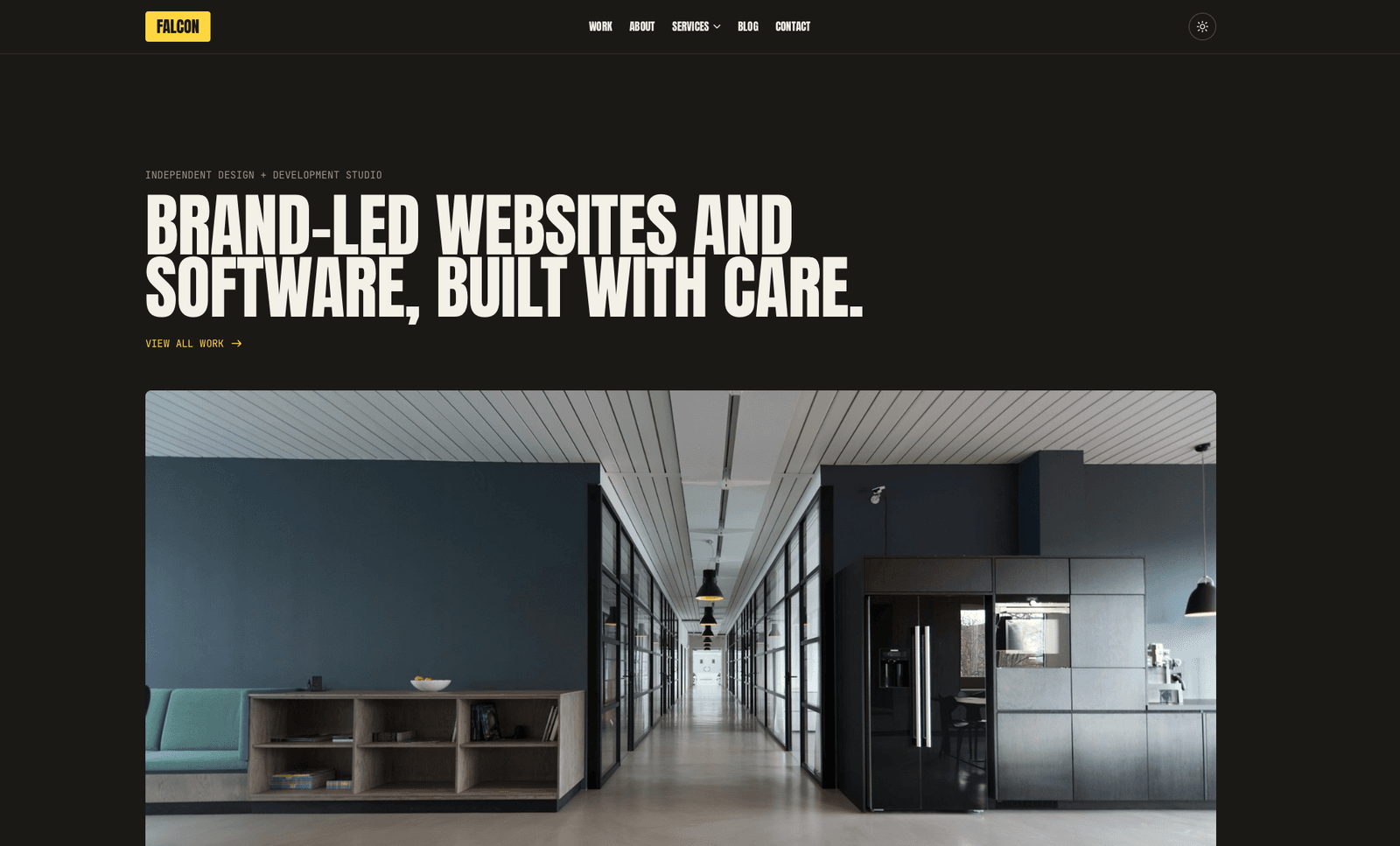
Agency and portfolio sites live and die on presentation. Studio pairs expressive type with a portfolio grid and case-study pages, while Falcon brings a confident, motion-led design with stacking case studies for studios that want to make a statement.
Photography
Photographers need their images to be the interface, not compete with it. Aperture is a gallery-grade theme with a semantic light and dark canvas, a cursor-follow work index, and a keyboard-navigable lightbox - built to feel like a gallery wall rather than a marketing page.
Blogs and personal sites
For writers and personal brands, Muse offers a warm, hand-crafted blog design, and Persona is a first-person portfolio-and-blog hybrid for freelancers and creatives who want their site to sound like them.
Local business and trades
Local service businesses need to look credible and capture the call. Anvil is a dark, confident theme for plumbers, electricians and trades, with a numbered services list, a before-and-after slider, a quote form, and LocalBusiness structured data baked in for local SEO.
The affordability angle
Quality and price are not always aligned in the theme market. Premium single themes on the curated directories commonly sit in the seventy-five to one hundred fifty dollar range. AeroLaunch prices single themes from thirty-nine dollars, with the most across the collection at forty-nine, which puts genuinely premium, Astro 7 and Tailwind v4 themes within reach of solo founders and small teams - not just funded companies.
There is one more differentiator worth flagging because almost no theme shop offers it: a visual builder. AeroLaunch themes can be edited point-and-click, like a CMS, and then exported as a real Astro project. That means you get the speed and ownership of an Astro theme without needing to touch code to change your content.
Theme or scratch build?
Unless your brand demands a bespoke design, start from a theme. The slowest part of any website is recreating the layout, components, responsive behavior and SEO foundations - all of which a good theme has already built and tested. You drop in your content, adjust the config, and ship in a fraction of the time, then customize from a working base.
Browse the full collection to find the one that fits what you are building, and if you would rather not touch code at all, edit it visually and export real Astro when you are done.
Frequently asked questions
Where can I find Astro themes? +
Three main places: the official astro.build/themes directory, curated directories like Statichunt that list hundreds of free and paid themes, and individual theme shops such as Themefisher, Cosmic Themes and AeroLaunch. The official directory and the curated directories are the best starting point for browsing; the shops are where you buy and get support.
Are there good free Astro themes? +
Yes. Plenty of high-quality free and open-source Astro themes exist, and curated directories list dozens of them. Free themes are a great way to evaluate Astro before paying for anything. The trade-off is usually support, documentation depth, and how polished or distinctive the design is.
What should I look for in a premium Astro theme? +
Check that it is built on a current Astro version (Astro 7) and Tailwind v4, that you get the full source code with a clear license for client and commercial work, that it includes the pages and sections you actually need, and that updates and support are included. Price matters, but code ownership and being on the current framework version matter more.
How much do premium Astro themes cost? +
It varies. Curated directories list premium themes commonly in the range of roughly seventy-five to a hundred and fifty dollars for a single theme. Some shops, including AeroLaunch, price single themes lower, from thirty-nine dollars, which makes premium quality more accessible for solo founders and small teams.
Should I use a theme or build from scratch? +
Unless your brand needs a highly custom design, a theme saves you the slowest part of any build - recreating layout, components, responsive behavior and SEO tags. You drop in your content and ship in a fraction of the time, then customize from a working base.
Start from a production-ready Astro theme
Skip building the design from scratch. These themes are full Astro 7 + Tailwind v4 projects you own outright - and you can edit them visually, no code, with the AeroLaunch builder.