AI Website Builders vs Astro Themes: What Founders Should Use in 2026
AI website builders and vibe coding tools are everywhere right now, but founders still need distinctive design, clean code, and something they own. Here is where Astro themes fit.
AI website builders are having a very loud week.
The current conversation is not just “AI can make a website now.” That part is old news. The newer question is more useful: if AI can generate a website in a few minutes, why do so many of those sites still feel the same?
That is the tension founders are feeling in 2026. Tools like Lovable, Replit, Base44, Bolt, v0, Cursor, and the rest of the AI builder stack are excellent at getting from a blank page to something visible. But “visible” is not the same as credible, memorable, fast, maintainable, or yours.
Astro themes sit right in the middle of that gap.
What is trending right now
Two things are happening at the same time.
First, AI website and app builders are moving from novelty to infrastructure. Recent coverage around Lovable, Replit, Base44, and other “vibe coding” platforms is less about whether prompting can create software, and more about whether these tools can become full business platforms for founders. A July 2026 Business Insider piece framed Lovable and Replit as more than code generators: they are trying to become AI cofounder-style platforms with workflows, hosting, payments, and startup scaffolding around the code.
Second, the design backlash is getting louder. Another recent Business Insider story covered Base44 building its own model partly to fight the recognizable “AI slop” look: the same soft cards, same safe layouts, same generic polish, repeated across prompt-built products. That phrase is uncomfortable because everyone knows what it means the moment they see it.
At the same time, Astro itself is moving in a very relevant direction. Astro 7.0.0 shipped in June 2026, and the current patch line is already moving quickly, with Astro 7.0.7 released on July 8. One of the more interesting Astro 7 changes is not a visual feature at all: astro dev can now run in a background mode designed with AI coding agents in mind. The framework is quietly becoming friendlier to the way people are actually building now.
That gives us a useful question:
If AI can build a site, why start from a theme?
Because most founders do not need “a website-shaped thing.” They need a site that can survive being seen.
An AI builder is good at speed. It can help you sketch a landing page, produce first-draft copy, generate a quick dashboard mockup, or explore three directions before lunch. That is real value.
But the last mile is where a public website wins or loses trust:
- The navigation needs to make sense.
- The design needs a clear point of view.
- Mobile needs to be handled, not hoped for.
- The copy needs to sound specific.
- The blog, docs, pricing, contact, legal pages, and SEO metadata need to exist.
- The source code needs to be something you can keep.
A theme solves a different problem than a prompt. A prompt gives you a first pass. A theme gives you a system.
The problem with prompt-first websites
The most common issue with AI-generated websites is not that they are bad. It is that they are average in the same way.
They tend to converge on what the model has seen most often: oversized hero sections, blurry gradients, rounded cards, vague product language, feature blocks that could belong to any SaaS, and a visual style that looks polished from far away but thin up close.
That is fine for a throwaway prototype. It is risky for a real launch.
When a customer lands on your site, they are not grading your prompt. They are trying to decide whether you seem serious. Sameness works against you there. If the page feels like it came from the same machine as every other launch that week, your product has to fight harder to feel real.
Why Astro themes age well in the AI era
Astro themes are not anti-AI. They are a better surface for AI to work on.
A good Astro theme has a few properties that pair naturally with modern AI coding agents:
| Need | Why Astro helps |
|---|---|
| Readable project structure | Pages, components, content, and config are easy to inspect. |
| Fast static output | The default build produces lightweight HTML instead of a heavy client app. |
| Content-first workflow | Markdown, content collections, and config files are natural places for AI-assisted edits. |
| Framework flexibility | You can add React, Vue, Svelte, or plain Astro only where interactivity is needed. |
| Code ownership | You are not locked inside a hosted AI builder once the site is live. |
That last point matters more than people think. A generated site inside a hosted tool may be easy to start, but painful to leave. A real Astro project can be opened by a developer, edited by an AI agent, deployed to Cloudflare Pages, Netlify, Vercel, or a static host, and kept for years.
The workflow that makes sense now
The best workflow in 2026 is not “never use AI” and it is not “let AI generate everything.”
It is this:
- Use AI to explore positioning, page structure, headlines, and rough copy.
- Start from a real Astro theme with a strong design system.
- Customize the theme with your content, screenshots, colors, and sections.
- Use AI again for edits, variants, blog outlines, and implementation help.
- Deploy the finished Astro project somewhere you control.
That gives you the useful part of the AI wave without letting the AI define your entire visual identity.
Where AeroLaunch fits
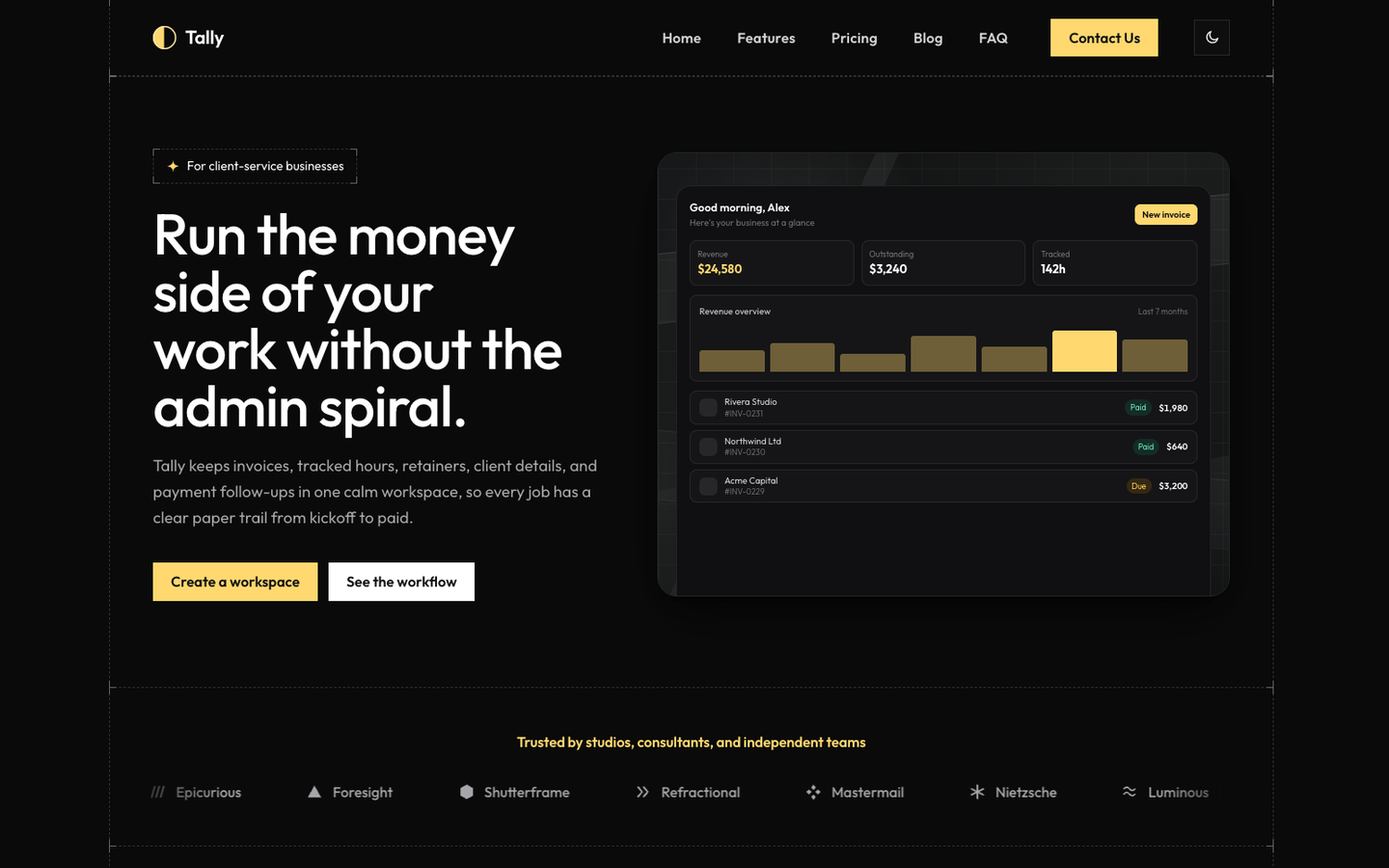
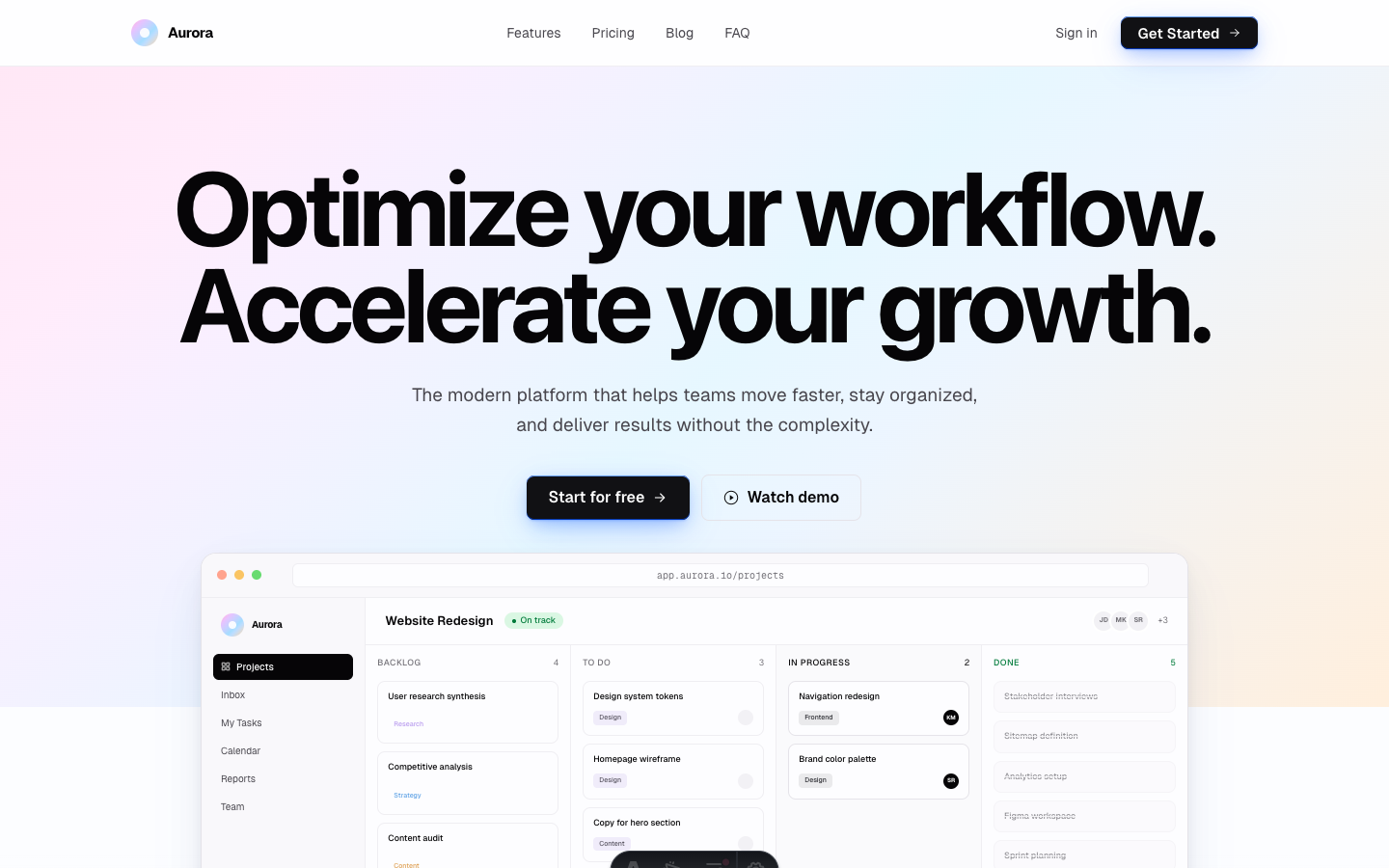
AeroLaunch is built around that exact middle path. The themes are not just image-heavy demos or placeholder landing pages; they are complete Astro projects with real sections, blog support, pricing, contact pages, responsive behavior, SEO structure, and a design language already in place.
You can edit them three ways:
- Open the code and change the content yourself.
- Use the AeroLaunch visual builder to edit point-and-click, then export real Astro.
- Use an AI coding agent on the source, starting from a clean project instead of a blank prompt.
That combination is the important part. You still get the speed people love about AI builders, but you start from something more durable than a generated first draft.
AI builders are great for prototypes. Themes are better for launches.
This is the cleanest way to think about it.
Use AI website builders when the question is “what could this be?” Use Astro themes when the question is “can this go live?”
AI tools are changing how sites get made. That is real. But the more websites people generate, the more valuable distinctive, well-structured starting points become. In a world full of prompt-made sameness, a good theme is not less useful. It is more useful.
The future is not blank canvas versus template. It is AI-assisted editing on top of code you own. That is where Astro is heading, and it is exactly why themes still matter.
Frequently asked questions
Are AI website builders replacing themes? +
Not completely. AI website builders are useful for quick prototypes, but themes still solve the parts founders care about when they go live: a coherent design system, responsive sections, SEO structure, performance, and code ownership. The strongest workflow is often AI for drafting content and iteration, plus a production-ready theme for the actual site.
Why do AI-generated websites often look the same? +
Many AI-generated websites are trained toward common interface patterns: rounded cards, soft gradients, generic SaaS layouts, and overly familiar copy. That makes them fast to create but easy to recognize. A well-made theme starts from a stronger design point of view and gives you a system to customize instead of a one-off generated screen.
Is Astro good for AI-assisted website development? +
Yes. Astro is especially good for AI-assisted site work because the project structure is readable, content can live in Markdown or config files, and the output is fast static HTML by default. Astro 7 also added dev-server behavior designed with AI coding agents in mind, making it easier for agents to work on a running project.
Should a founder use an AI builder or an Astro theme? +
Use an AI builder when you need to explore an idea quickly or generate rough copy and structure. Use an Astro theme when you want a polished public website, fast performance, and source code you can own, edit, and deploy anywhere. If you want both, use a visual builder on top of a real Astro theme.
Can I use AI tools with an AeroLaunch theme? +
Yes. AeroLaunch themes are normal Astro projects, so you can edit them manually, use the AeroLaunch visual builder, or work with AI coding tools on the source. The difference is that the starting point is already designed, responsive, and organized instead of being generated from scratch.
Start from a production-ready Astro theme
Skip building the design from scratch. These themes are full Astro 7 + Tailwind v4 projects you own outright - and you can edit them visually, no code, with the AeroLaunch builder.